Wood deck is a very common addition in our residential home. It is our extended
living space.
You can grow flowers and vines in pots, harvested vegetables from
trellises, trimmed a topiary tree rose and even enjoyed a small water garden.
Blooms from a miniature tropical water lily closed each evening at dusk.
The same effect can be achieved on your deck,
bringing the garden from the yard to your fingertips, complete with fragrance,
color and even wildlife.
Deck gardening does present a unique set of challenges, however. Wind can
topple potted trees and desiccate their foliage, watering is a constant worry
and when it's time to relax even avid gardeners need relief from insistent
late afternoon sun.
All those problems can be solved, of course, and must be solved for a deck
or balcony to be transformed into an inviting urban oasis.
We started with a few annuals, and quickly
discovered that watering becomes a twice-daily chore unless steps are taken to
minimize water loss. Large pots retain more moisture than small pots because
of the volume of soil, so we switched to bigger pots. Lining the inside of
clay pots with clear plastic (just the sides, not the bottom) also helps
reduce evaporation. Or, try coating the inside surfaces with a clear non-toxic
sealant.
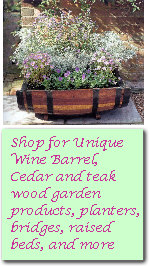
If I were starting again I'd consider purchasing
cedar wood planters instead of clay or
plastic. Wood planters compliment your wood deck wonderfully and blend into
the outdoor decking area.
Of course, if I were starting at the very beginning and building my own
deck or balcony, some of the planters would be built-in. They'd create the
"walls" of an outdoor garden room and be designed to give privacy and to look
like a natural extension of the indoor living space.
Depending on the construction of the deck or balcony, it might be wise to
consult an architect or building engineer before installing a complete garden.
For most rooftops, a few pots or planters would not be a problem, but large
planters can weigh hundreds of pounds when saturated (the only reliable way to
calculate weight). You must be absolutely certain a deck or balcony can bear
the load.
No outdoor living space is completely comfortable in summer without
protection from late afternoon sun. The building itself may provide that, if
the balcony faces north or east. But direct sunshine from a south- or
west-facing exposure can render a balcony useless for several hours each day.
Solve the problem by adding trellises to cast light shade or by building an
open post-and-beam shelter, called a pergola. An experienced carpenter can
recommend ways to brace these structures to make them sturdier.
Remember, vertical elements have to bear not only the weight of vines — and
fruits, if you're growing vegetable such as cucumbers, as we did — they must
also withstand wind. An upright surface covered with foliage takes a beating
on a windy day.
Plant fast-growing annual vines, such as morning glory, cypress vine or
hyacinth bean, in large planters at the base of each post. With good care and
plenty of sun, they should cover the structure by mid to late summer.
If you prefer natural screening, erect a strong open frame that will
support a collection of hanging baskets. Include plenty of cascading plant and
arrange them at different heights to achieve maximum privacy.
Potted plants require more water and fertilizer — a lot more — than similar
varieties growing in the ground. You'll be surprised at just how fast the
recommended lightweight potting mixtures dry out.
To supplement those peat-based mixes, we added sterilized topsoil. Twenty
percent by volume seems to be the ideal ratio. Real mineral soil helps the
potting medium retain moisture and nutrients longer. As a result, plants stay
healthier all season.
Water-absorbing polymer crystals are another standard ingredient, along
with a generous measure of slow-release fertilizer. Slow-release plant foods
don't provide vegetables or blooming annuals with complete nutrition, but they
help. Supplement with soluble liquid fertilizer, such as fish emulsion, mixed
at full strength. Apply as often as once a week when plants are blooming.
For a satisfying gardening experience, choose plants with exquisite
fragrance, such as sweet peas, or those with blooms that open in the evening,
like moonvine and evening primrose.
Plants with pink and red blossoms will attract hummingbirds to your
balcony, and by season's end, sweetly scented butterfly bush (Buddleia
davidii) will delight with its blossoms as well as with its brightly-clad
winged visitors.
 Gardeners' Corner
Kids'
Garden
Sustainable Garden
Contact Us
Gardeners' Corner
Kids'
Garden
Sustainable Garden
Contact Us